tiistai 9. elokuuta 2016

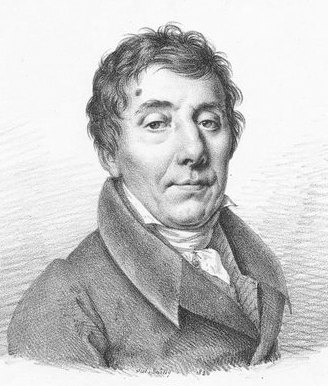
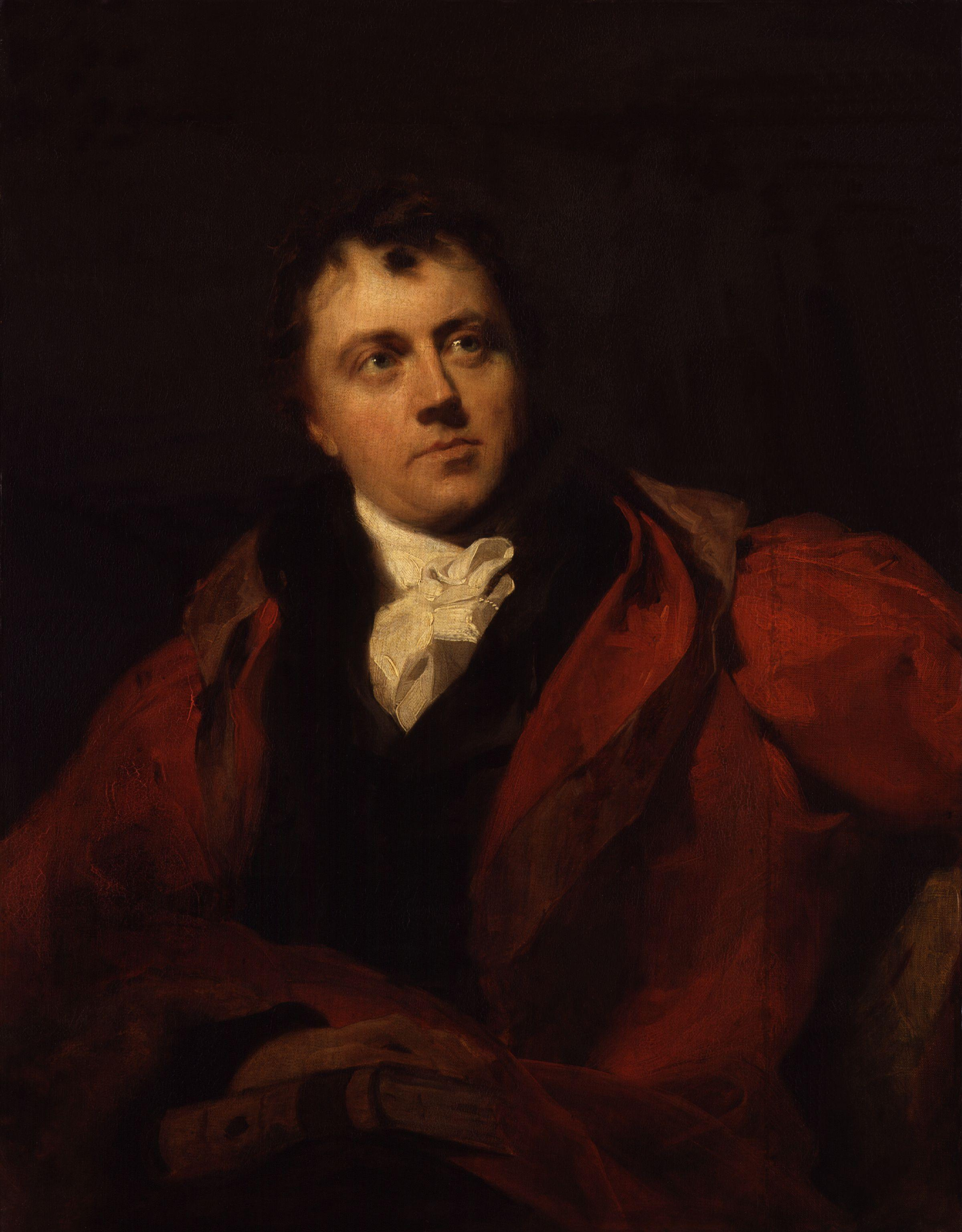
James Mackintosh: Discourse on the Study of Law of Nature and Nations (1802)

(1765-1832)

Law of nature and nations (or in Latin, ius natura et gentium) is something I have had more occasion to deal with in my German Idealism blog, as the topic was one interesting many pre-Kantian philosophers in Germany. Indeed, Mackintosh himself mentions Christian Wolff as one of his predecessors, although he doesn't have much to say about him – Wolff is mostly, he says, just a follower of Samuel Pufendorff.

Mackintosh's short essay is not meant to be more than an introduction to his lectures on the topic. Thus, he is not able to give more than a history and an outline of the issues involved in law of nature. Even the short history is of a philosophical interest. Mackintosh states that most of what he would present in his lectures is not novel, and indeed, much of it has been revealed by ancient philosophers, like Aristotle and Cicero.

Yet, what modern philosophers have been able to add to these ancient truths is justification. While Aristotle had merely accepted some moral certainties, modern philosophers have at least tried to base them something else. This foundational ground of law of nature, according to Mackintosh, is metaphysics, by which he apparently means study of human nature. We don't have Mackintosh's actual account of human nature, but his general idea accords with the strategy held by previous theories of law of nature – what humans should do is based on an account of the supposedly fixed and immutable essence or nature of humanity, which thus gives infallible knowledge on the best of humanity.

Indeed, we can at once see that this emphasis on the metaphysical grounding of ethics is meant to work as a sort of defense of traditional morality. Mackintosh especially picks out two institutions that had become an object of criticism lately: marriage and private property. These two instances form a clear example of the problems the idea of an immutable law of nature would face these days. Mackintoch admits that property and marriage are institutions with a history, still, he wants to say there's a clear standard according to which the most modern forms of these institutions are better than the earlier forms. Furthermore, he goes even so far as to suggest that particularly with marriage, no further development is possible, because the development in the equality of men and women has a natural limit – Mackintosh is here clearly supposing that these two genders again have some natural essence that cannot be breached. What Mackintosh does not answer in this short introductory essay is the question whether humanity might not be historically determined species, that is, that there might be no immutable essence of humanity, at least not in a strong sense required for basing a universal system of morality.

Moving on from private ethics to public politics, Mackintosh immediately speaks against the fiction of an original social contract, which he deems leads either to highest despotism (in Hobbes) or to highest anarchy (in Rousseau). Instead, he returns to the Aristotelian notion of humans as essentially social animals – human beings have always existed in some type of communities. By this method, Mackintosh can outright assume that humans have mutual obligations toward one another. He also clearly favours the conservative notion of a slow development of communities and their constitutions and denies the possibility of making up a good constitution in a fortnight. Yet, his ideal of a state is not medieval, such as we've seen with some French conservative thinkers. Instead, Mackintosch thinks that the purpose of state is to guarantee the liberty of citizens, that is, making them free of all disturbances, including those instilled by governors. It is then no wonder that Mackintosh especially congratulates the English constitution.

We might find it strange that an account of ethics and internal politics should be combined with an account of what we would call international affairs and what Mackintosh still calls law of nations (he does know the word ”international”, which had been recently coined). Yet, in a sense this does make sense – nations could be regarded as individuals, and indeed, they usually were represented by individuals or monarchs at the time of Mackintosh. We don't get much information on what Mackintosh would have lectured about the international law, but he appears to believe that all intercourse between nations presupposes some general rules. Still, he does admit that one can again develop the international affairs, especially through diplomatic pacts, and he seems to believe current Europe to be the highest point in the history of international affairs.

torstai 4. elokuuta 2016

Thomas Robert Malthus: An Essay on the Principle of Population (1798)

(1766-1834)

Out of all figures I’ve thus far investigated in my blog, Malthus appears most current. Population of the world has been rising almost exponentially during the last century, and especially the Third World has suffered from this. When a superpower like China has felt forced to use such drastic measures as their former one-child-only policy, we can truly speak of a global issue.

Behind Malthus’s work lies a simple consideration. He notes that without any restraints, population would rise in a geometrical progression – if a family would have in average, say, three children, the children of this average family would have around nine children, these children would then produce 27 children and so on. This is of course a very rough estimate, but we can accept at least that the rate of reproduction would be quite high.

Now, Malthus noticed that population of his time did not show as great tendency of continuous growth, although such leaps might happen sporadically. The natural conclusion was that something restrained this growth. Malthus surmised quite naturally that it was the limited number of resources and especially food, which constrained continuous population growth. True, more people could produce more food, but the growth happened, Malthus stated, only in arithmetical progression. Malthus really had no reason to suppose that the food supply would grow in arithmetical progression, but the important point was more that the growth of food production would eventually fall greatly short of the growth of population.

What is especially interesting in Malthus’s account is his idea of the actual mechanics by which the limitedness of food supplies affects the population growth. One means Malthus indicates is misery. If there are more mouths to feed, but not that much more food to give them, people will not get as much to eat as earlier. This leads to malnutrition, diseases and ailments caused by it, and in the most extreme case, to starvation. After a while, the population will have lowered to a level, when the worst effects of misery subside – and the population starts to grow again in the more favourable conditions.

Malthus’s view of this cycle of hunger and reproduction battling one another is quite bleak, but what to do, he says, it is just a law of nature (a common excuse from people who notice a problem, but won’t do anything about it). Indeed, Malthus goes at some point even so far as to suggest that any attempt of a society to regulate this cycle is doomed to failure – if you try to give the poor something to eat, they’ll just reproduce even more and the problem is created anew. With the optimism of an English clergyman, Malthus supposes that it is all just God’s plan to awaken some moral sense in humans – when we see suffering around us, we’ll start to feel pity – and that all will be made better in the afterlife.

Malthus’s conservative stance is especially striking in his attitude toward the second check of population growth. Malthus calls this check vice, but it is pretty evident he is especially thinking of all sorts of sexual acts that do not lead to reproduction. One might think allowing this sort of “vice” would be at least a partial answer to Malthusian problematic. Indeed, it has usually been the drive for sexual pleasure and not the more ephemeral drive for reproduction that has led to unrestricted population growth – people who desire children of their own tend to desire them in some limited amount, while the desire for sexual pleasure might well exceed any assigned limits. At least we can be happy that Malthus accepts the latter need as a fact of human nature and quickly crushes all hopes of humankind ever getting rid of sexual needs. Indeed, he even quite beautifully describes an ideal marriage as a state in which highest sensual gratification is combined with social virtues, like companionship.

In a later edition Malthus introduced a third check of population growth, and this time one he regarded positively: a custom that people (and especially men) should not marry, before they have the means to provide for their family. Firstly, we might notice that Malthus never imagined this as a law, although he suggested government might give a negative incitement for it by not giving charities to poor families with lot of children. Indeed, this suggested custom is another aspect of Malthus’s idea that this world has been given to us as a place for moral growth – what better way to show one’s morality than to silence one’s desires until one can care for all their consequences?

Furthermore, Malthus’s old-fashioned morals appear in this suggestion even more prominently. Surely one can have children even out of wedlock, but this is something Malthus condemns forcefully. What is even more disturbing is the indication that marriage is a state in which reproduction is an unavoidable fact, and in a sense, even a duty. Indeed, Malthus’s view can be understood only if the person with the most to lose in child rearing – the woman, who will carry all the babies – has an obligation to always accept his husband’s wish for an intercourse. One just has to wonder what Malthus would have thought of families actually planning when and even whether to have children.

tiistai 2. elokuuta 2016

Louis Gabriel Ambroise de Bonald – Theory of political and religious power in civil society demonstrated by reasoning and history (1796)

1754-1840


We've looked at few examples of liberal political thinkers, who have believed in the possibility to consciously and rationally plan the human societies and thus make further progress in human condition. One result of French Revolution was the emergence of an ideology opposed to such liberal philosophies – one that aimed for restoration and conservation of traditional societies. One example of this conservative ideology was de Bonald's Theorie du Pouvoir Politique et Religieux dans la Societe Civile Demontree par le Raisonnement et l'Histoire.

De Bonald's idea of a good society is based on his notion of human beings as essentially dual persons, with intertwined physical and mental or spiritual aspects. Thus, he divides human societies into two kinds: political, in which the physical aspect preponderates, and religious, in which spiritual aspect preponderates. Although these societies have their differences, because they serve essentially different ends, more interesting are the analogies and similarities de Bonald finds between the two societies.

The first important element in de Bonald's view of societies in general is that he believes societies to naturally incline to some necessary, lawful customs. These customs might vary from one society to another, just because the people in these societies are different (de Bonald appears to suggest that this difference is more due to heritage than environment of the people). The customs or laws represent the true universal will of that society – they are not willed by the collection of the individual persons, but in a sense, by the organic unity formed by the interaction of these persons.

The purpose of both political and religious powers is then to conserve these natural laws, de Bonald says. In essence, no progress is required, once the society has found its natural course, and all that is required is that the conservation should happen as efficiently as possible. This requires then that the conserving force of the society must be as great as possible and embodied in one individual: pope, in the case of religious society (or actually God, but even he must have a single representative on worldly plane), and monarch, in the case of political society.

Of course, this monarchic constitution is not meant to be despotism based on mere whims of one person – monarch does not so much make laws that suit him, but just defends existing laws. He does need executive power to effect his role and thus arises the need for various people that help the monarch (priests in case of religious society and nobility in case of political society). Hence, de Bonald explains the necessity of the two estates, while the third estate seems to him a mere afterthought and not an essential requirement of a good society.

It is then no wonder that it is the medieval France which de Bonald holds to be an epitome of a good society. He is quite certain that monarchic France has never really aimed at anything else, but preserving status quo both internally and externally – the only exception he accepts is Louis XIV, although even he could only round French territory with few natural additions. It appears de Bonald has completely forgotten that kings of France had over the centuries engaged in various internal and external conflicts, stealing power from the nobles of their own land, attempting to conquer territories in Europe and in other continents and even attacking the pope, leader of the faith they supposedly also protected.

In contrast to monarchic France, the ideal of all liberals or the constitution of England is seen in an ambiguous light. De Bonald suggests that while usually in monarchies powers cannot and shouldn't be divided, England makes an exception, because it is not an organic unity, but a combination of two societies. One of them is a regular monarchy, while the other is a society of commerce, represented by the parliament. De Bonald is quick to point out that this combination is quite volatile – economical progress makes conserving the traditional feudalistic society difficult.

The worst kind of society in de Bonald's eyes is one that is set up not on any necessary laws, but on arbitrary decisions of individuals – no matter whether of a single individual (in despotism) or of a supposed combination of all individuals (in republic). De Bonald insists especially that a mere vote is not sufficient for finding out Rousseau's ”general will”. The biggest problem for de Bonald is that republic can never really take into account will of every individual, but its decisions always represent the interests of only one faction. In a somewhat tendentious fashion, de Bonald suggests that republics have a habit of starting wars with other countries, that internally they are in danger of slipping into pure anarchy and that from a religious aspect they fall to atheism.

keskiviikko 27. heinäkuuta 2016

Thomas Paine: The Age of Reason (1794, 1795 and 1807)

Thomas Paine (1736-1809)

We return from France to America, to yet another of the Founding Fathers of the United States, only to quickly return to France. Thomas Paine had a hand in two revolutions, being also a member of the revolutionary Convent. As a foreigner and a known ally of a moderate republican Girondin movement, he was imprisoned, when the radicals led by Robespierre had managed to take control of the government. While in prison, Paine wrote the first part of his The Age of Reason, a book investigating Christian religion from the standpoint of Deism.

After being salvaged from impending death by the execution of Robespierre, Paine added two further parts to the book. In the prison cell, he had had no Bible to check, and the final parts are meant to accommodate for that fault: Paine goes painstakingly through various books of the Bible, finding out evidence suggesting that the book is not a work of divine revelation.

Paine's primary strategy is to point out internal incoherencies – Moses couldn't have written the first books of the Bible, because he dies before the end of the book, supposed prophecies pointing to the coming of Christ were actually related to ancient affairs of Jews and their kingdoms etc. Although this part of Paine's book was quite relevant when it appeared, it seems trite nowadays, since no one in his right mind takes Bible as a literal source of history. Of course Bible has it inconsistencies – just the existence of two different creation stories belies this. But far more interesting than such biblical nitpicking is to ask why these stories, with all their inconsistencies, have been able to cause a feeling of divinity in their readers.

A more interesting avenue of criticism lies in Paine's discussion of dreams – or the criticism itself is again quite trite (dreams of a person are no proper testimony, and even if God would have used them to reveal his will to people, this power of revelation would only hold for those who had the vision), but the machinery behind this criticism is interesting. Paine sets out an intricate picture of human mind. The driving force of mind is imagination, Paine says, and its activities are recorded by memory and regulated by judgement. Imagination works always, but memory and judgement often rest during sleep. When memory is not working, we don't have any recollection of what we have thought. When memory is working, but judgement is not, we are dreaming.

In addition to incoherence, Paine criticized the supposed immorality of Bible. Lot of this criticism is undoubtedly to the point – stories of ancient Israelites killing innocent babies are cruel. Still, Paine's disdain is also at times difficult to understand. Thus, Paine thinks that the idea of God forgiving sins would be detrimental to morality, because bad deeds would not then be punished in any way. Yet, one might say that at least in some cases true repentance is an acceptable option for external punishment.

Another part of Paine's crusade against the impious Bible is his insistence that the biblical notion of immortality is crass. Christianity speaks of bodily resurrection, but, Paine suggests, a body similar to our current body would just wind out just as our current bodies. Thus, he concludes, immortality must mean change into a completely different, more perfect plane of living. Paradoxically, Christian notion of immortality is then denied by Paine because it is too materialistic – a reason why it was easy for Christian philosophers to accept Aristotelian notion of soul.

After having thrown away all of Bible, Paine directs his reader to the true revelation of God, that is, nature. There is not much original in Paine's naturalistic theology, but we might notice one curious detail in it, namely, Paine's attitude towards mathematics. It appears that Paine thinks even mathematical truths were designed and chosen by God. Thus, mathematics becomes one of the natural sciences, because e.g. the relationships of different triangles are in Paine's eyes evidence for God's existence.

keskiviikko 13. heinäkuuta 2016

Marquis de Condorcet: Historical picture of the progress of human spirit (1795)

Condorcet (1743-1794)


At least after World Wars, any talk of inevitable progress in history seems out of place – every apparent step forward appears to have led to even more horrible atrocities. Yet, the notion of progress seemed so natural for over a century that it should be seriously considered, even if the idea feels naive these days.

Condorcet's Tableau historique des progrès de l'esprit humain is as infatuated with the idea of progression as a book can be. Its picture of human history is not a straightforward line of progression, because Condorcet does accept that the development of humanity could stop from time to time – for instance, in quite a traditional fashion, Condorcet paints Middle Ages as a time of cultural stagnation and even decay. Still, the main theme of Condorcet's work is one of on-going development.

Condorcet begins from pre-historical times. Of course, he lived in time, when no reliable knowledge of the early development of humanity was available and he was thus forced to speculate on many important questions. Yet, he did raise a central question – why did particularly human beings gain the power to form huge civilisations? Condorcet notes some peculiarities in the physical form of humans – e.g. two hands give them advantage in forming tools. But the most important element explaining the rise of human kind was language, Condorcet says.

An important early invention was agriculture, which helped to sustain human life and allowed people to gather into large collections. This centralisation of human population is not just pure development, Condorcet says, because it also led to centralisation of wealth and power. More remote offspring of this current is warfare – it makes no sense to conquer a roving band of hunter-gatherers, but it is possible to conquer villages and towns. Such conquests led to even further imbalance in society, since the conquering class of people usually received more rights than the people conquered.

One major theme in Condorcet's writing – and indeed, in whole Enlightenment – is the supposed deviousness of clergy. Clerics had power, because they had some important knowledge, for instance, about movement of stars and about proper times for planting seeds. Clergy also had the access to alphabets, early versions of which were often cumbersome to read and write. Although holders of knowledge, priests also mixed truths with errors and even outright lies, which helped them to control the human population.

Condorcet's rather fanciful conspiracy theory sets the tone for the rest of the book. Greeks began the process of liberating reason from superstition, but because they couldn't obliterate the power of priests and other tyrants, the progress was halted and continued only in renaissance. Condorcet emphasises especially the development of science at the beginning of modern age, but also the invention of printing press, which kept truth alive, even under censure. Then final phase of the human development begins then with the American and French Revolutions, which helped to eradicate final social inequalities.

It is especially Condorcet's speculation of the future of humankind, which interests us. It comes as no surprise that Condorcet believes in even further progression, which could be forestalled only by a barbarian invasion. I already noted that Condorcet believed that French revolution had resulted in destruction of all privileges traditionally given to some class of people. Condorcet went even so far as to suppose that in the new society even the genders would have equal status. This does not mean that Condorcet would have held the idea that women could be as valuable as men in society. Especially in case of mathematical sciences, Condorcet believed that females could never obtain the highest rank of a creative genius – a common presupposition of his day.

Condorcet also didn't think that all inequality could be eradicated forever, because he supposed people to have different natural talents, which inevitably leads to e.g. differences in wealth. Yet, like any student of Adam Smith, Condorcet appears to have believed that a kind of invisible hand would keep economy balanced and fair, as long as all traditional privileges were cancelled.

We might ask if Condorcet's hope of diminishing inequality could be nothing but a phantom, if he was not willing to give the state any power to regulate the economy. Yet, Condorcet puts all his chips on education – a very Enlightenment-like move. Apparently all that is enough is just teaching everyone to look things from a more general perspective and especially making them learn probability calculus. Armed with this tool, a person could just calculate her chances of getting any profit from some actions – and by seeing, for instance, that potential punishments overcame all possible benefits of a crime, anyone would be convinced of not committing a crime.

We are starting to see the weak side of Condorcet's science fiction, that is, blind reliance on the powers of human reason. It is fantastic to think that everyone could become a master calculator, able and willing to use mathematics for finding out the best course of action. Yet, even if such a fabulous discipline could really exist in any but quite rudimentary fashion, we might still be skeptical of everyone actually using such a behavorial calculus – and having the strength of will to follow its advice, even against strong temptations.

Similar naivety occurs also in Condorcet's notion of international politics: he believes that the value of commerce would inevitably lead to a time of peace, since in the new liberated phase of human history no country would in the long run benefit from a war. Still, Condorcet does allow patriotism, and indeed, believes it to be a necessary part of the life of a good citizen – one must love one's country and all its denizens. Again quite naively, Condorcet thinks that in a good society, patriotism cannot be in conflict with cosmopolitan and open attitude toward other nations.

maanantai 20. kesäkuuta 2016

Mary Wollstonecraft: A vindication of the rights of woman (1792)

Mary Wollstonecraft (1759-1797)

Works that begin some field of study or movement are sometimes quite different from what works belonging to that field or movement generally are. Development of such fields and movements leads often to some idiosyncracies, which weren't discernible in the seminal works. Thus, it is no wonder that the major work of the supposed founder of feminism May Wollstonecraft, feels often quite alien in its tone, when compared to later feminist works.

The feeling of strangeness is especially prominent, when one thinks about the goal and purpose of the Vindication. Historically, feminism is famous for advocating rights of women. On the contrary, Wollstonecraft's book is less about right and more about duty. True, she does speak for giving women more rights, but she justifies this demand by noticing that more rights would make women more useful in the society – classic argument, hailing all the way from Plato. Furthermore, Wollstonecraft is also willing to accept the possibility that women have even naturally inferior intellectual skills – she just wants to point out that their inferiority is no reason for not developing them.

From these quite non-feminist or even antifeminist principles Wollstonecraft develops more progressive ideas, which often seem quite self-evident these days – or at least, they should seem. Education should be provided to all children – preferably, by communities – and particularly girls should not be left without any intellectual stimulus. Furthermore, girls should be allowed to run and play, because exercise improves physical vigour, which is also required for learning. And last, but not least, women should have an equal status in society with men, they should be able and even demanded to work for their living, and if they happen to marry, they should not be held as mere appendages of their husbands.

Although all these ideas seem so evident to us – and most likely seemed quite radical back in the day – Wollstonecraft's duty-centric viewpoint gives them a peculiar light. Wollstonecraft's starting point is the prevailing picture of women as irrational beings who follow their instinct and fancy and who are governed by sensibility. Wollstonecraft's thesis is that these supposed peculiarities of woman nature are just results of their upbringing – if women are not given anything other to care about than their outward appearance, they won't in the end care about anything else.

What Wollstonecraft shares with the writers she criticizes is the idea that in their current state women simply are inferior – although she is careful to emphasize that this inferiority is not to be blamed on the women or their nature. Wollstonecraft holds the old idea that certain lifestyle, which might be called sensual, has a lower than value than a lifestyle that is supposedly based on reason. In other words, when women think of nothing but making themselves beautiful, Wollstonecraft implies, they are not just wasting their skills, but they are wasting their whole lives and even living badly.

To be fair, Wollstonecraft's criticism is not in any sense gender-specific. Indeed, she is quite willing to condemn men who live in the same manner. In fact, she suggests that both soldiers and nobility often resemble women in their behaviour – soldiers learn to not think and to just look good in their uniforms, while noblemen are spoiled and pampered and therefore fail to become dutiful citizens. Still, it appears quite surprising that Wollstonecraft would go so far in expressing the inferiority of a certain lifestyle, when modern feminism is more about liberating everyone, no matter what their gender, and letting them decide their lifestyles for themselves, without any explicit or implicit pressure to behave in a certain manner. Yet, Wollstonecraft just is a child of her times – after all, the urge to educate humankind to supposedly better lifestyle was quite an established idea, again, at least since the time of Plato.

Wollstonecraft shows her reliance on tradition also in her motives for emphasizing duties. True, she admits, if we would only live this one life, there would be no reason to condemn a life of sensibility and everyone would have the right to increase the amount of pleasures they experience. Indeed, she appears to say, in this case even men would have no reason to let women live up to their potential, because they would get more pleasure out of women in their childlike condition. But, Wollstonecraft points out, this is not the only life we'll live, since God has destined us to another life beyond death. Thus, behind Wollstonecraft's feminism lies a religious mindset.

Even with these peculiarities, Wollstonecraft's work is a milestone in history of thinking. Rarely before this was the state of women considered in such a reasonable fashion, and while the suggested improvements were at first ridiculed, they did eventually lead to positive social developments – what more could we ask of a philosopher?

maanantai 2. toukokuuta 2016

Comte de Volney: Ruines or meditations on revolutions of empires (1791) and Natural law or catechism of French citizen (1793)

Comte de Volney (1757-1820)

It has been said that at the end of 18th century two culturally important transitions occurred. One was the appearance of Kant's first Critique, the second was French Revolution. Although these events occurred in very different fields, both did shatter some truths that were long held to be incontrovertible.

While the first of these events is clearly philosophical, it might seem difficult to find any philosophy in the latter. True, there were philosophical inspirations for the revolution, especially in the earlier French Enlightenment, but if one believes elementary introductions to philosophy, it all disappeared when political tumult began.

Yet, there were philosophical writings appearing during the French Revolution and written by French persons. Writings of de Volney could be said to embody many of the themes of the revolution. Indeed, Les Ruines Ou Méditations Sur Les Révolutions Des Empires is a clear homage to French revolution. Volney's book commences with the author meeting a spirit, which allows him to view Earth, as it were a distant planet watched through an enormously powerful telescope. The spirit shows the author how states were born – it is the old theory of social contract, with people joining together, because life in natural state was too filled with dangers (especially those posed by fellow human beings).

In original societies all people were equal, Volney says, but then some people begun to gather power and form an aristocracy, or if they based their power on supposed divine ordinance, a theocracy. At the end of this development are monarchies, which are often founded by people raising one person above others in order to protect themselves from the aristocrats. It is just this division of classes that makes societies weak, Volney suggests. When majority have no say in the affairs of state, they have no motivation to defend it against external aggressors. Of course, conquest means just change of one oppressor to another.

Volney also suggests a solution to this seemingly never-ending cycle of empires rising and falling. When people are enlightened, they finally grow weary of their rulers and throw them away. Clearly referring to French Revolution, Volney tells a tale of a great Western nation removing the shackles of upper classes and giving the power to the whole people.

But revolution in one country is not enough for Volney, who desires freedom for the whole globe. What Volney finds most hindering such a universal revolution are the cultural and especially religious differences – people are lured to obey the rulers by priests, who say they hold the only access to truth. Volney lets the different religions fight with themselves and shows how all of them contain details that are held to be absurd by proponents of other religions. He also launches a common anthropological attack against all religions. Religion, Volney says, begun when people thought natural phenomena like thunder or rain were living beings that could be persuaded by gifts and prayers. Especially astronomical knowledge and moral notions developed religion into forms we know nowadays, and indeed, all religions hail from the same source. Thus, Christian story of Easter still shows influence of ancient idea of bad god of winter being banished by good god of summer.

Yet, Volney does not ascribe to atheism, but seems to uphold some form of deism, in which inexplicable force has created the world around us. Indeed, in his La loi naturelle ou Catéchisme du Citoyen français Volney suggests that this God created also the natural morality. It seems no wonder that Volney sees no difference between a law of gravity and a law of morality – both are just the way how God created the world to be like. Thus, moral law is inscribed in human heart, particularly in the pleasures and pains, which are in Volney's opinion a sure guide for good behaviour. True, Volney knows that one might lose one's health, if one is too interested of some sort of pleasure, but this excess is shown just by pains caused by such overindulgence – and it is surely no reason to go to other extremity and avoid all pleasures altogether. The true end of moral law, Volney says, is always conserving oneself. This does not mean egoism, Volney says, because human beings are naturally social and want to live in good and just societies.

I should probably note the naivete of Volney's thought and cynically remind everyone that e.g. removal of religions would most likely not remove the borders between states. Still, I find the energy and passion of his works quite refreshing. These were still times, when the idea of a progression of culture was still somewhat new and when it appeared quite believable that a sudden removal of few kings would bring the paradise on Earth. Dream of a better humanity is something we would still need today.