Näytetään tekstit, joissa on tunniste natural law. Näytä kaikki tekstit

tiistai 6. toukokuuta 2025

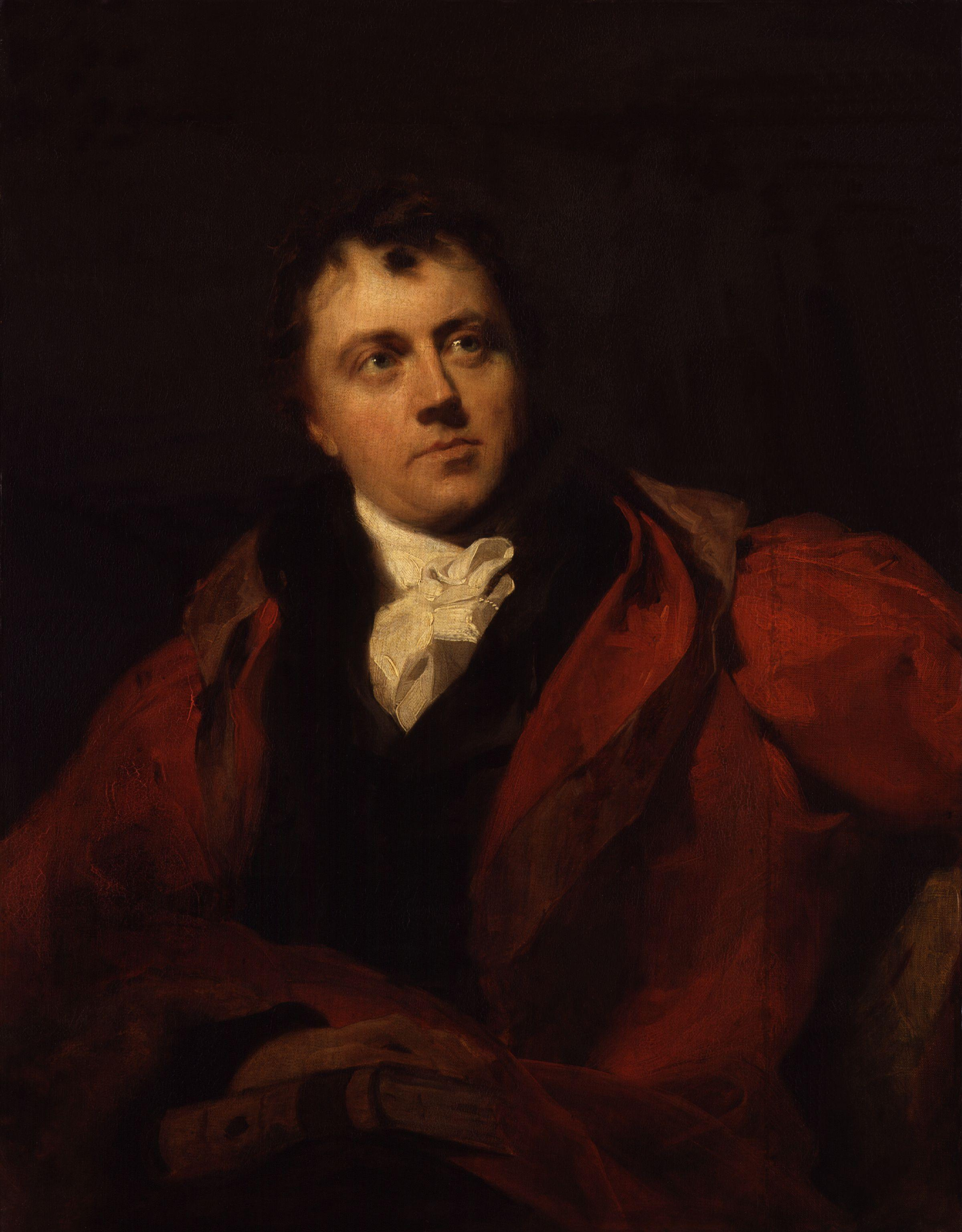
Théodore Simon Jouffroy: Course of natural right – Theoretical views

After reviewing a number of alternative theories about goodness, Jouffroy is finally ready to share his own ideas about it and thus to give a firm foundation to the (unpublished )future course of natural law. He starts in a Kantian fashion, distinguishing the immutable form of moral judgements – the good in itself – from the particular matter or variable circumstances, to which this form is applied. This difference, Jouffroy explains, makes it possible that natural law is immutable, but still is a science where we can make progress: we can always find new circumstances, where we have to decide what is good in them.

Now, an important feature of good in the case of particular individuals is that the good in this question should be the end or purpose of these individuals, Jouffroy insists. He immediately adds that this is no tautology, since it gives us a method for determining in each particular case what is good. Different beings have different natures or they are organised differently, thus, Jouffroy concludes, they must have different ends, indicated by their natures.

Jouffroy argues that since all things have an end – as clear and evident truth as causality, he thinks – their sum must also have an end, which is determined by the ends of the individual beings. In other words, the universe has an order that is moving toward a unified end. This final end is the good in itself we have been looking for, Jouffroy insists. As free and intelligent beings, he adds, we can understand that the universe has such an end and we have the capacity to contribute to this end by fulfilling our own portion in this whole: thus, we are obligated to do so.

Jouffroy asks still further what makes this end of the universe good. He answers that really nothing outside it, because as a total good, beyond it there can be nothing more good. Thus, Jouffroy argues, this goodness must be absolute and based on something necessary, that is, God, who is the source of the goodness of the universe: in other words, God does not make goodness good, but goodness is as immutable as God’s own nature, and God merely makes the universe conform to this goodness. This relation to God, Jouffroy things, makes goodness sacred and connects natural law with religion.

Jouffroy admits that not all humans can understand this final ingredient of sacredness in the notion of good. Indeed, our very view of the final end of the universe is limited by our standpoint: we can know there must be such an end, but we cannot say in detail what this end is like. Yet, Jouffroy insists, we can at least know something about the end of things we know best, that is, human beings. He will not go through this end in detail – this would be the topic of the whole natural law – but merely gives a very summarised overview of it.

An important aspect of Jouffroy’s idea of the human end is that humans have been provided with means by which to strive for their end, even if they lacked the full understanding of morality. Thus, our natural instincts and self-interest are not necessarily in contradiction with our final end and even contribute toward it most of the time. We want to, for instance, know things and associate with other human beings, because knowledge and communities are parts of human destiny.

Jouffroy notes that we can clearly never fully realise our natural tendencies in this life, because, for example, absolute knowledge and harmonious society of all humans are something we haven’t been able to reach. He concludes that the end of humans must be found in another life, which in a very Kantian manner requires that we must live after our seeming deaths. The end of this life, Jouffroy thinks, is to develop our personality by providing obstacles that make us virtuous and worthy of happiness.

All free and intelligent beings or persons strive toward their end, hence, Jouffroy insists, we must respect them and let them fulfill their own destinies. Yet, he adds, there are beings that are not free nor intelligent, in other words, that are mere things. Such mere things cannot have obligations, because they lack the tools for fulfilling them. Even these things must have ends, Jouffroy thinks, but their end is fulfilled by God, who uses them as mere instruments. In Jouffroy’s opinion, we humans can also use them as instruments, without a fear of violating them, and if our end requires altering or even destroying them, we are allowed to do so (a pretext for killing animals).

perjantai 2. toukokuuta 2025

Théodore Simon Jouffroy: Course of natural right – Defining good

We are getting closer to a point where Jouffroy should start describing his own theory about the nature of good. Thus, he explains, he will be quick in describing various attempts of giving a rationalist definition of what good is, since the proper measuring stone for these various theories is Jouffroy’s own notion of good.

Jouffroy begins with a British Enlightenment thinker, William Wollaston, who defined good as truth: we should act in accordance with truth, and for instance, breaking a contract is acting like it was never made. Jouffroy notes quickly that Wollaston’s definition is quite shallow: when we use arsenic to poison someone, we could be said to respect the truth that arsenic is poisonous, and while trying to use snow to warm oneself might be absurd, it certainly isn’t immoral.

Jouffroy is as quick with Samuel Clarke and Baron Montesquieu, who both defined good actions to be in conformity with the nature of things. With the exact same examples as with Wollaston, Jouffroy shows the absurdity of this definition: it is immoral, but in agreement with the nature of arsenic to use it for poisoning, and while it contradicts the nature of snow to use it for warming oneself, it certainly isn’t immoral to attempt doing it.

Jouffroy is more positive with the ideas of Nicholas Malebranche, who defined good in terms of the order of entities emanating from God: these emanations have different degrees of perfection, depending on how close to God they are, and loving things according to their perfection should make us closer to God and thus more perfect, earning more of the love of God for ourselves. Jouffroy thinks that Malebranche is close to truth, but his idea of perfection is too vague, making it too difficult to deduce exact duties from it. In effect, Jouffroy states, Malebranche was too much of a metaphysician and forgot humans when concentrating with God.

As for Christian Wolff, Jouffroy thinks his fault is the exact opposite from Malebranche, that is, Wolff wasn’t metaphysical enough. Like Malebranche, Wolff defined good through the notion of perfection, but Jouffroy finds it more lacking, since Wolff never explains why good is to be identified with perfection. Furthermore, Jouffroy continues, Wolff never gave a sufficient explanation what perfections meant in case of individual humans.

From Wolff, Jouffroy moves to his opponent, Christian Crusius. Against all Leibnizians, Crusius had emphasised God’s absolutely free will and defined good as what God wills. Jouffroy thinks that Crusius is not following the correct order, since not even divine will can make anything good. Otherwise, he insists, we could not have a clear criterion for recognising what is good.

Jouffroy is very quick with Richard Cumberland and Samuel Puffendorf. Both made the same mistake that they concentrated only on what is good in social relations of humans, ignoring the question of what is good for a human being in isolation from all other humans or what is good for a human in relation to God or to other non-human things. Jouffroy also disregards all systems that merely say that good is to e.g. follow the law of nature, since he considers such statements to be mere tautologies.

Jouffroy’s purpose for the whole book has been to discuss modern systems of ethics, ignoring all ethical theories of ancient philosophers. Yet, he makes an exception with Stoicism, for the simple reason that he considers Stoics to have been near to the truth about the matter.

The philosopher in the context of rationalist systems of ethics Jouffroy spends most time with is Immanuel Kant – he even goes through Kant’s ethics twice, just in somewhat different words, because he thinks it is important for his readers or listeners to have a clear understanding of Kan’t novel method. Jouffroy finds much to like with Kant, especially his criterion for deciding what to do and what not to do: true obligations must be such that every free and intelligent being in any circumstances could act accordingly. Despite this positive feedback, Jouffroy thinks Kant forgot the most important question of the whole of ethics, namely, what is good or what is the ultimate goal of human beings, leaving thus his own ethics incomplete.

maanantai 28. huhtikuuta 2025

Théodore Simon Jouffroy: Course of natural right – Indefinable good

Jouffroy thinks he has by now proven that good is not identifiable with happiness nor with any object of natural instinct. The only solution left, he states, is that good is an a priori concept reason, which is immediately connected with the notion of obligation: what is good ought to be searched for. The next question is to decide within this rationalist notion of good whether the concept of good is indefinable or whether it can be analysed further.

Jouffroy begins to investigate the first of these options. Just like with previous systems, he chooses a prominent example, who this time is Richard Price, a philosopher who reacted against the sentimentalist system of Francis Hutcheson. Jouffroy does admit that Price had predecessors (Ralph Cudworth) and successors (Thomas Reid and Dugald Stewart), but thinks that Price set the same idea up in more distinct terms.

Jouffroy notes that like all rationalists, Price rejected the notion that the concept of good could be derived by empirical means and thus concluded that it must be based on intuitive reason. Yet, Jouffroy thinks, Price makes a crucial error in not distinguishing two different notions of good: what is good in itself or absolutely, independent of human beings, and conformity of a voluntary action of a free intelligent being to this absolute good, which could be called virtue or moral good. Indeed, Price states that good is a quality belonging primarily only to actions, although, Jouffroy objects, actions wouldn’t be good without the absolute good.

The confusion makes Price accept an account of how we come to know good that is quite opposite to the way in which Jouffroy imagines the process works. According to Jouffroy, we must at first have at least an implicit concept of absolute good, which we then use to evaluate the goodness of actions. Price, on the other hand, thinks that we have an intuitive grasp of the goodness of actions, and we at most abstract a general notion of good from these individual intuitions of good actions. With Jouffroy’s account, he insists, we must at first be able to define what is good in itself, in order to recognise the goodness in actions, again in opposition to what Price thinks about good.

Jouffroy understands why Price adopted his theory in his historical context. The important element in this context, Jouffroy thinks, was Locke’s rejection of all ideas that were not derived from senses or reflective observation of oneself. When philosophers like Hutcheson tried to explain good in this Lockean framework, they assumed the existence of a new, moral sense, which perceived good and evil as simple qualities of action. When Price rejected the Lockean framework and took reason as another source of ideas, he still inherited the notion of good and evil as simple qualities of actions.

Jouffroy suggests that there are further reasons why Pricean theory seems natural. The things discovered by philosophy, he explains, are later just assumed as axioms by the so-called common sense. Thus, moral truths discovered in the past become later immediately assumed as self-evident. In other words, Jouffroy says, it becomes natural to assume, like Price, that we immediately recognise actions as good or evil. This illusion is strengthened by the fact that educators tend just to teach that some actions are good, but not why they are – often they themselves do not know these reasons.

Furthermore, Jouffroy continues, God has provided us with natural instincts striving for goodness, in order to strengthen our reason. Thus, when we begin to reason about ethical matters, we already have strong emotions about them, and since our idea of good is still obscure, we think we have immediate perceptions about the goodness of actions. In addition, Jouffroy explains, these natural instincts make all people share similar opinions about certain common actions. These common actions have been used as examples by most moral philosophers, and because of the shared opinions about them, their moral quality is imagined to be immediately perceived. Generalisation makes philosophers then extend this idea to the whole of ethics.

If goodness is an immediately perceived simple quality, like Price thinks, reasoning has nothing to do with recognising what is good and how good it is. This means, Jouffroy explains, that there can be no discussion or demonstration concerning goodness: we can only say that we immediately perceive an action to be good or evil. Indeed, it seems impossible even to have any difference of opinions about goodness. Thus, Jouffroy concludes, there can be no experts on the question of goodness, and indeed, no science of natural law. Price cannot even explain, Jouffroy thinks, why we educate children about ethics or why we are more lenient toward criminals whom we consider to not have capacities for moral reasoning.

Jouffroy finds similar problems with Price’s notion that nothing is good independently of actions. Price’s commitment means, Jouffroy says, that good actions are done only because they are good, and the results of these actions are at most only derived goods. Thus, if our health is not a result of an action, it is not good, while a seemingly bad thing, like sickness, is good, if it just is a result of a good action. Indeed, Jouffroy notes, because the same thing can be a result of many actions, we cannot say whether it is good, before we know what action has generated it. In summary, we would not be interested in ends, like knowledge as such, but only of effects. Jouffroy finds all of this ridiculous: surely we must know at first e.g. that the results of just actions tend to be good, before we can conclude that justice is a good thing for actions to show.

When faced with facts not lining up with one’s system, Jouffroy notes, philosophers tend to introduce contradictions. Price makes no exception, he thinks. Thus, in order to account for ethical discussions, Price suggests that these concern circumstances of actions. Circumstances, including motives and ends, become then intrinsic elements of actions, and in separation from such circumstances, actions do not have any ethical character. Hence, Jouffroy concludes, Price has to admit, in the end, that to know an action to be good we have to know independently that its end is good and that we can then define what it means to be a good action.

The closer to truth we get, Jouffroy concludes, the harder it is to find the errors in the systems we investigate. Still, we have managed to make another step forward, he thinks: we now know that good is definable, although we as yet do not know how to define it.

tiistai 31. joulukuuta 2024

John Austin: The Province of Jurisprudence Determined – The limits of utilitarianism

Although Austin advocates utilitarianism in case of determining the commands of divinity, he is aware of its limits, which are ultimately the limits of the human mind. In other words, there are numerous possible cases to consider and no single person can ever determine the proper course of action for all of them, and indeed, most people have never enough time to determine even the most central duties.

Austin’s answer is that this problem is actually common to all sciences. For instance, no single person can find out all the truths of mathematics, but these have been revealed bit by bit by different mathematicians. Indeed, even nowadays no one knows everything in mathematics perfectly and even the mathematicians must rely on the authority of other mathematicians to be convinced of such mathematical truths they have not had the opportunity to study themselves.

Austin admits that the case of ethical studies is still somewhat different from other sciences, because there are not that many impartial persons researching ethics, but essays on ethics are often marred by personal interests or by adherence to unreasoned customs. Because of this, no reliable consensus has been reached and thus there is as yet no ethical authority to follow.

Yet, Austin sees this lack more as a temporary impediment than as a permanent obstacle for the development of ethics. Indeed, he is certain that there is an extensive consensus at least of the basic principles of ethics. Austin even suggests that anyone could by now learn these principles and thus develop a trust on the authority of professional ethicists applying these principles to practice: he gives a somewhat hopeful example that the poor will completely stop thieving, once they have understood that the institution of private property is good for the whole society. In any case, Austin insists, the more the utilitarian principles will spread among the populace, the more people there will be to do proper scientific ethics.

A faultless system of ethics can never be found, Austin says. Still, we as a society can at least improve our understanding of ethics and come more and more closer this system and full knowledge of God’s commands.

maanantai 30. joulukuuta 2024

John Austin: The Province of Jurisprudence Determined – Divine law

After determining the general definition of law or rule, Austin proceeds to distinguish human made law from divine law. As one might expect, he characterises the divine law as decreed by God. Duties toward divine law are then religious duties and violations of those duties are sins. Like all violations, sins lead to sanctions – religious sanctions – which God should inflict in this life or in the life beyond.

Austin divides divine law into revealed law and unrevealed law. Revealed law should be based on the express commands of God. Then again, unrevealed law, although given by God, should not be based on their express command. In fact, Austin says, unrevealed divine law is what is often called natural law and should be followed by all human beings, no matter whether they have heard divine commands. The problem is, how human beings become aware of the unrevealed divine law.

Austin thinks there are only two theories for the criterion of the unrevealed divine law. First of these theories, he says, states that all human beings have universal sentiments for approving certain actions and disapproving others. This moral feeling or conscience is, according to this theory, given to humans by God, for the purpose of discerning what God has commanded.

The other theory, Austin continues, is that the natural law must be discovered through reason, with the aid of the principle of general utility. Austin is here basing utilitarianism in the benevolence of God, who wants the happiness of all sentient creatures and has thus decreed that they should do things increasing general happiness and avoid things decreasing it.

Austin explains that the principle of general utility is meant to be applied to general tendencies: what would be the result for the general happiness of humankind, if an act of certain kind would be generally done or avoided? Thus, although an action would as such increase the happiness of humankind – say, when a poor person steals something from a rich person, who doesn’t even notice the theft – the action would still be forbidden, because universal permission of thievery would make the whole institution of property impossible. On the other hand, although punishment as an individual action is detrimental to human happiness, it is useful as a foundation of a general system of laws. Hence, Austin concludes, God’s commands are, for the most part, general rules that are to be followed with no exception.

Austin notes a common objection to utilitarianism: if we really had to make precise calculations whether an action contributed to the general happiness of humanity, we would never have time to act, since such deliberation would be too difficult. Austin answers, firstly, by noting that if we do not have any immediate moral sense, as suggested by the first theory, this deliberation is our only possibility to find out the divine commands. Secondly, he notes that the deliberation is meant only for testing general rules of action, which can then be applied without a moment’s notice. Furthermore, Austin adds, we do have sentiments for these rules – for instance, we hate thievery – which provide immediate motives for our actions.

Austin admits that in some cases the general rules do not show us the best course of action. For instance, it is usually beneficial to follow one’s government, since anarchy is so detrimental to human happiness. Yet, in some cases the government itself might be of so great detriment to the happiness of its subjects that a revolution is in order. In such a case, Austin concedes, a deliberation about this specific action must weigh more than a deliberation about the general rule. In these cases the deliberation would take time, as supposed by the objection against the utilitarianism, but Austin considers this good, since one should not lightly act against general rules.

tiistai 9. elokuuta 2016

James Mackintosh: Discourse on the Study of Law of Nature and Nations (1802)

(1765-1832)

Law of nature and nations (or in Latin, ius natura et gentium) is something I have had more occasion to deal with in my German Idealism blog, as the topic was one interesting many pre-Kantian philosophers in Germany. Indeed, Mackintosh himself mentions Christian Wolff as one of his predecessors, although he doesn't have much to say about him – Wolff is mostly, he says, just a follower of Samuel Pufendorff.

Mackintosh's short essay is not meant to be more than an introduction to his lectures on the topic. Thus, he is not able to give more than a history and an outline of the issues involved in law of nature. Even the short history is of a philosophical interest. Mackintosh states that most of what he would present in his lectures is not novel, and indeed, much of it has been revealed by ancient philosophers, like Aristotle and Cicero.

Yet, what modern philosophers have been able to add to these ancient truths is justification. While Aristotle had merely accepted some moral certainties, modern philosophers have at least tried to base them something else. This foundational ground of law of nature, according to Mackintosh, is metaphysics, by which he apparently means study of human nature. We don't have Mackintosh's actual account of human nature, but his general idea accords with the strategy held by previous theories of law of nature – what humans should do is based on an account of the supposedly fixed and immutable essence or nature of humanity, which thus gives infallible knowledge on the best of humanity.

Indeed, we can at once see that this emphasis on the metaphysical grounding of ethics is meant to work as a sort of defense of traditional morality. Mackintosh especially picks out two institutions that had become an object of criticism lately: marriage and private property. These two instances form a clear example of the problems the idea of an immutable law of nature would face these days. Mackintoch admits that property and marriage are institutions with a history, still, he wants to say there's a clear standard according to which the most modern forms of these institutions are better than the earlier forms. Furthermore, he goes even so far as to suggest that particularly with marriage, no further development is possible, because the development in the equality of men and women has a natural limit – Mackintosh is here clearly supposing that these two genders again have some natural essence that cannot be breached. What Mackintosh does not answer in this short introductory essay is the question whether humanity might not be historically determined species, that is, that there might be no immutable essence of humanity, at least not in a strong sense required for basing a universal system of morality.

Moving on from private ethics to public politics, Mackintosh immediately speaks against the fiction of an original social contract, which he deems leads either to highest despotism (in Hobbes) or to highest anarchy (in Rousseau). Instead, he returns to the Aristotelian notion of humans as essentially social animals – human beings have always existed in some type of communities. By this method, Mackintosh can outright assume that humans have mutual obligations toward one another. He also clearly favours the conservative notion of a slow development of communities and their constitutions and denies the possibility of making up a good constitution in a fortnight. Yet, his ideal of a state is not medieval, such as we've seen with some French conservative thinkers. Instead, Mackintosch thinks that the purpose of state is to guarantee the liberty of citizens, that is, making them free of all disturbances, including those instilled by governors. It is then no wonder that Mackintosh especially congratulates the English constitution.

We might find it strange that an account of ethics and internal politics should be combined with an account of what we would call international affairs and what Mackintosh still calls law of nations (he does know the word ”international”, which had been recently coined). Yet, in a sense this does make sense – nations could be regarded as individuals, and indeed, they usually were represented by individuals or monarchs at the time of Mackintosh. We don't get much information on what Mackintosh would have lectured about the international law, but he appears to believe that all intercourse between nations presupposes some general rules. Still, he does admit that one can again develop the international affairs, especially through diplomatic pacts, and he seems to believe current Europe to be the highest point in the history of international affairs.

keskiviikko 25. maaliskuuta 2015

Sir William Blackstone: Commentaries on the Laws of England (1766)

No wonder how silly it seems to us nowadays, it has been traditional in universities that students of law did not learn the laws of their own countries, but laws of ancient Rome. This was not just a perverted antiquarian interest, but Roman law was often felt to be an ideal to which modern systems of law should strive for – indeed, especially in the continent many courts did adopt some predicts from it. Furthermore, the Roman law was followed by one important institution in Europe, namely, the Catholic Church.

Sir William Blackstone's commentaries are meant to rectify the lack of knowledge for English students of law. At the same time, Blackstone attempts to show how reasonable the English laws are – for instance, he emphasises the respect of freedom in English law, which is so great that even a slave landing in English soil will automatically gain liberty.

I am obviously not going to go through the whole of this large treatise, and one might even wonder what such a book on law has to do with philosophy. It is now more of a case who was interested of the book – or more likely, who was interested enough to insult it. Bentham, a philosopher I will read some time in the future, was apparently quite critical of Blackstone's treatise – Bentham thought that no laws should be thought good just because they were handed down by the tradition.

In any case, Blackstone's book does have its more philosophical parts, especially in the introductory section, in which he explains what it means to be a law. Rather traditionally, Blackstone relates laws of nature as laws governing the movement of bodies with laws of human behaviour. Furthermore, he also follows tradition in speaking of a natural law, that is, law that naturally governs all human behaviour and decides what is morally right and wrong, permissible and not. Like in case of laws of nature, Blackstone thinks that the validity of the natural law is grounded on God's will. This might sound a bit old-fashioned these days, but the very idea of a culturally neutral basis on which to decide right and wrong – and especially on which to decide if laws of a nation are right and wrong – is one that seems still viable today.

When one accepts the existence of natural law, it becomes then quite natural to ask what makes it right that states make more laws to govern human behaviour. Following Locke, Blackstone follows a very common idea – that of a social contract – governments can pass laws, because the people have agreed to follow such laws or any laws government decree. Blackstone does not completely accept the theory, but admits the idea of an original contract to be nothing else than a convenient fiction – people implicitly accept the laws of the land they've chosen to live in. This sounds a bit spurious, since people sometimes have not accepted the laws of their home country, and indeed, often have no say on the matter where they live, political, cultural and even language barriers truncating the possibilities considerably.


I suspect this suffices for a quick look on Blackstone's book, since I am not about to go to technicalities of English law. Next time I shall look in more detail at some French notions of politics and economy.